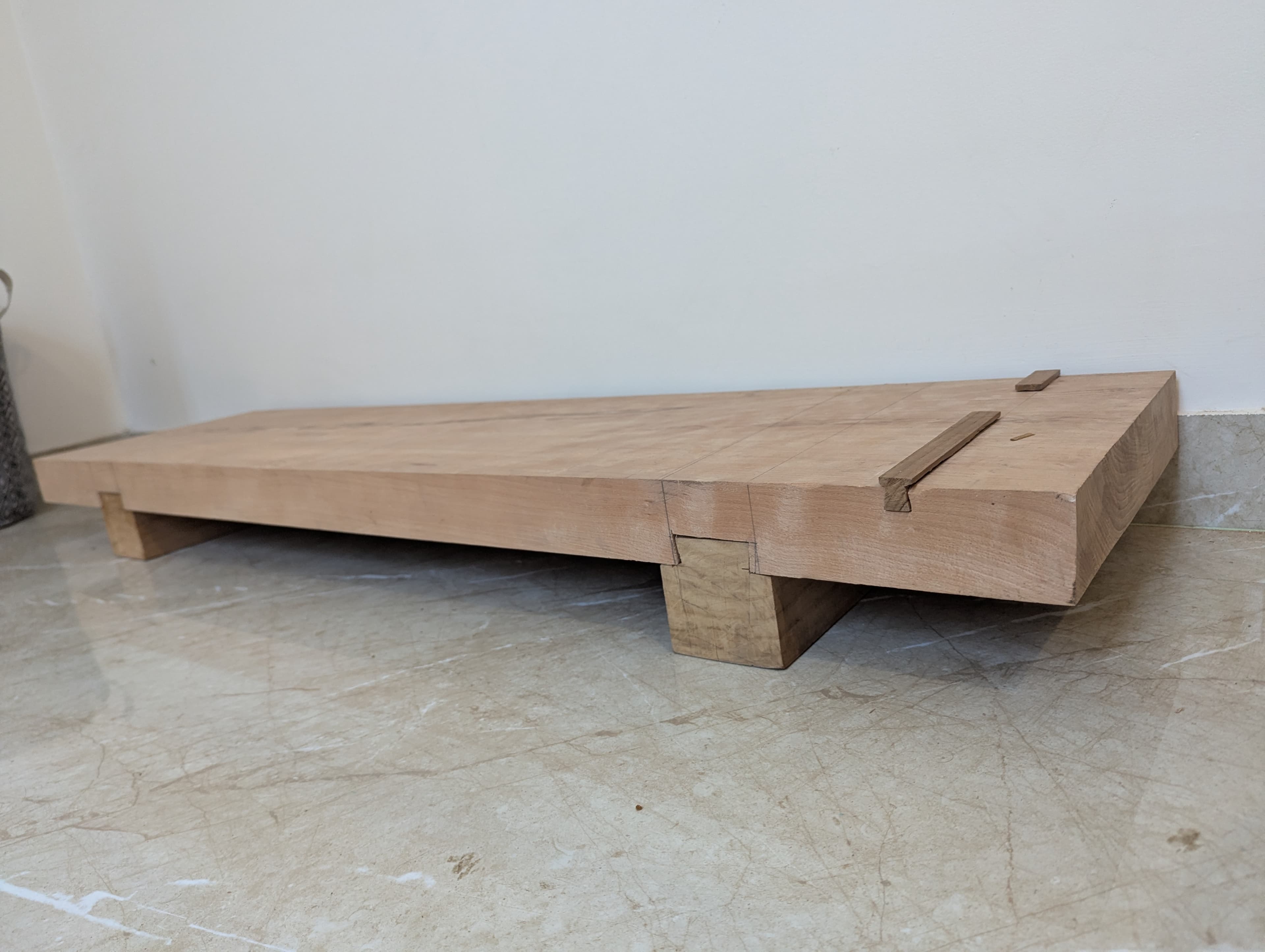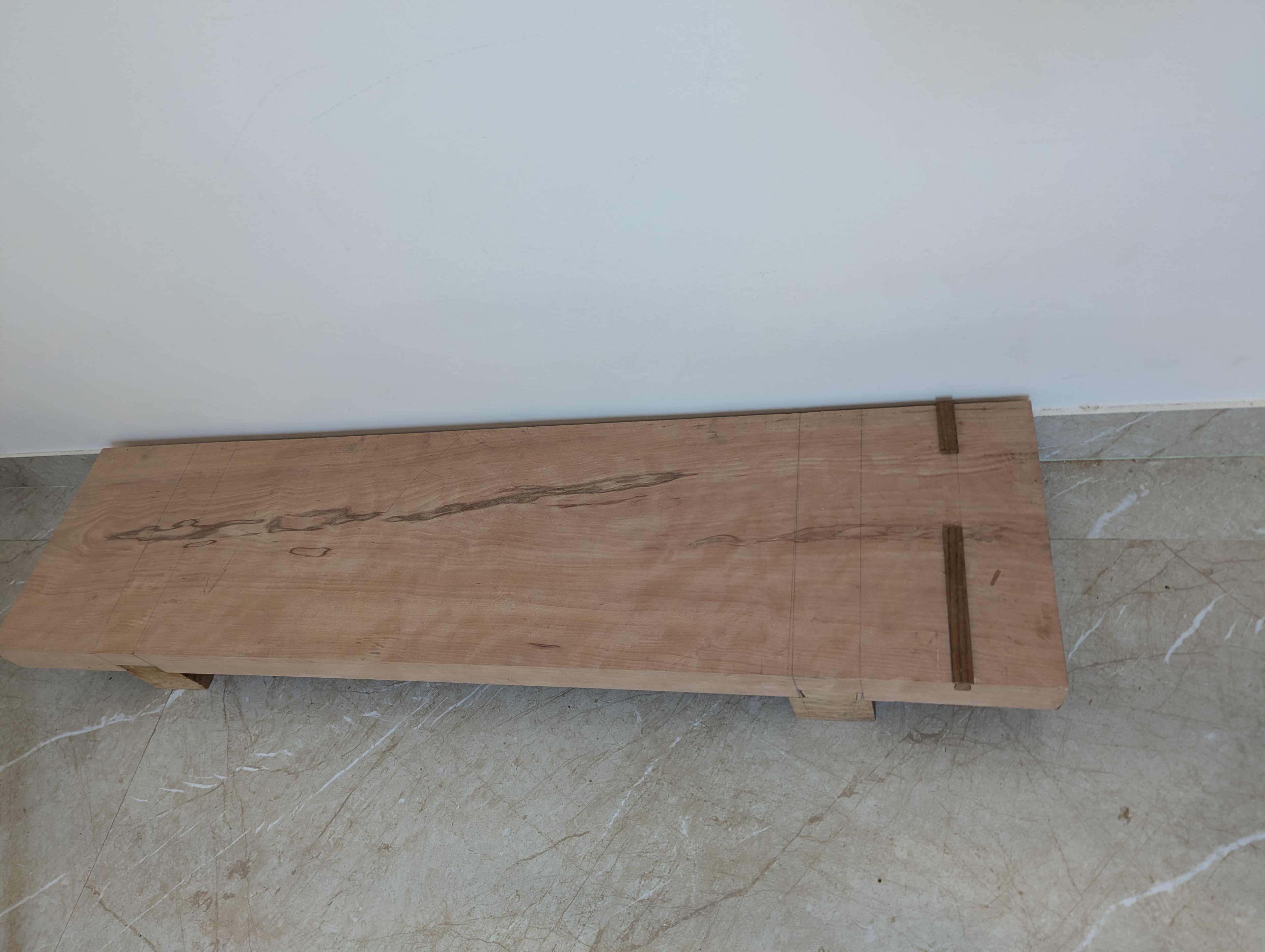
Building a Japanese Atedai Workbench
A low floor workbench for my small apartment. Build using a single woodworking joint - the sliding dovetail.
A workbench that has been used by Japanese carpenters for centuries, fits in a tiny apartment, and only requires learning one joint to build - that is the atedai, the Japanese-style low workbench. As I started my woodworking journey, I realized the dire need for a workbench to build more complex projects, but with my tiny apartment, I did not have the space for a proper workbench - until I chanced upon the atedai. It is made to be worked on while sitting on the floor, which means the work area is much bigger because you can use the floor to keep your tools and extend the workable area by using sawhorses. Most of all, if you prefer working while sitting down, this might be the workbench for you. All this made perfect sense for a space-constrained apartment like mine.
That one joint is the sliding dovetail - a dovetail-shaped tail that slides into a matching socket along its length. There are four sliding dovetails in this workbench: two tapered sliding dovetails (one wall of the socket is angled, so the joint tightens as it slides home) holding the legs, and two stopped sliding dovetails (the socket stops short instead of running through the full width) holding the pull stops - the raised stops you brace the workpiece against when sawing or planing on the pull stroke. Personally, I am a big fan of Japanese tools - the pull saws, the fine chisels and the wooden hand planes. And all these tools make much more sense when used with an atedai. But yes, it's a different way of working altogether. When you're working on this workbench, you need to use your body together with the tools and the workbench to get stuff done - use your knees to brace the workpiece against the workbench, use the pull stops with your other hand while doing cross cuts or sometimes just sit on the atedai and the workpiece, which is unconventional, but I've come to love this style of working. It does result in a good workout, which is a bonus.
The Build Process
The build at a glance:
- Body: Beech, 5' long & 14" wide, 3 inches thick
- Legs and pull stops: Teak
- Final height: 7 inches
- Joinery: four sliding dovetails - two tapered (legs) and two stopped (pull stops)
- Tools: hand tools only
Of course, you need wood to build it, so let's start there. I first thought about building this with Pine or Fir but decided to go for something heavier. My local sawmill had a good supply of Beech, so I opted to go with Beech for the body and Teak for the sliding dovetail stops and the legs. Since I am a handtools worker (I plan to shift to a more hybrid style over time), I got everything cut and squared at the sawmill itself. However, after bringing the wood home, I realized that it was not square. It was a tiny bit off, but since I was working with a long piece of wood, like 5' long & 14" wide, the non-squareness was visible. I began the very hard and back-breaking process of using my No. 5 plane (the general-purpose jack plane) to square the body of the atedai. It took me about eight hours across a couple of days to make it square and then I started the process of cutting the leg dovetail sockets.
I planned to make the atedai's final height at 7 inches with the top slab being 3 inches thick. I chose to keep the legs around 8 inches away from both ends and started work on the tapered sliding dovetail sockets. I used a taper of 1-2 degrees on one wall of the socket. Making such a big dovetail was a Herculean task and it took me quite a few hours to cut and chisel out the waste. It really helps to have a sawing guide -a block of wood cut to the dovetail angle that you rest your saw against. (I used a 1:7 dovetail angle).
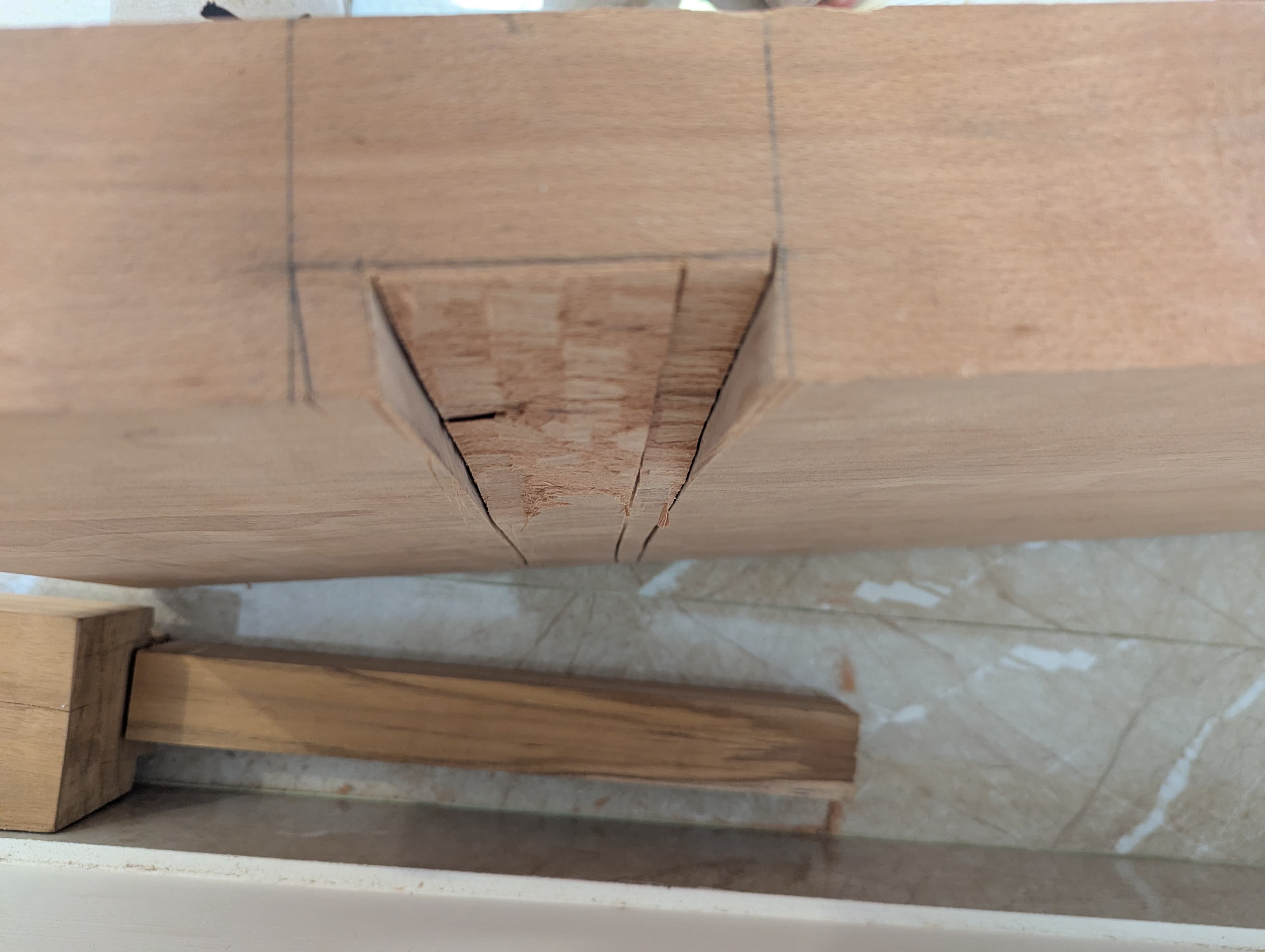
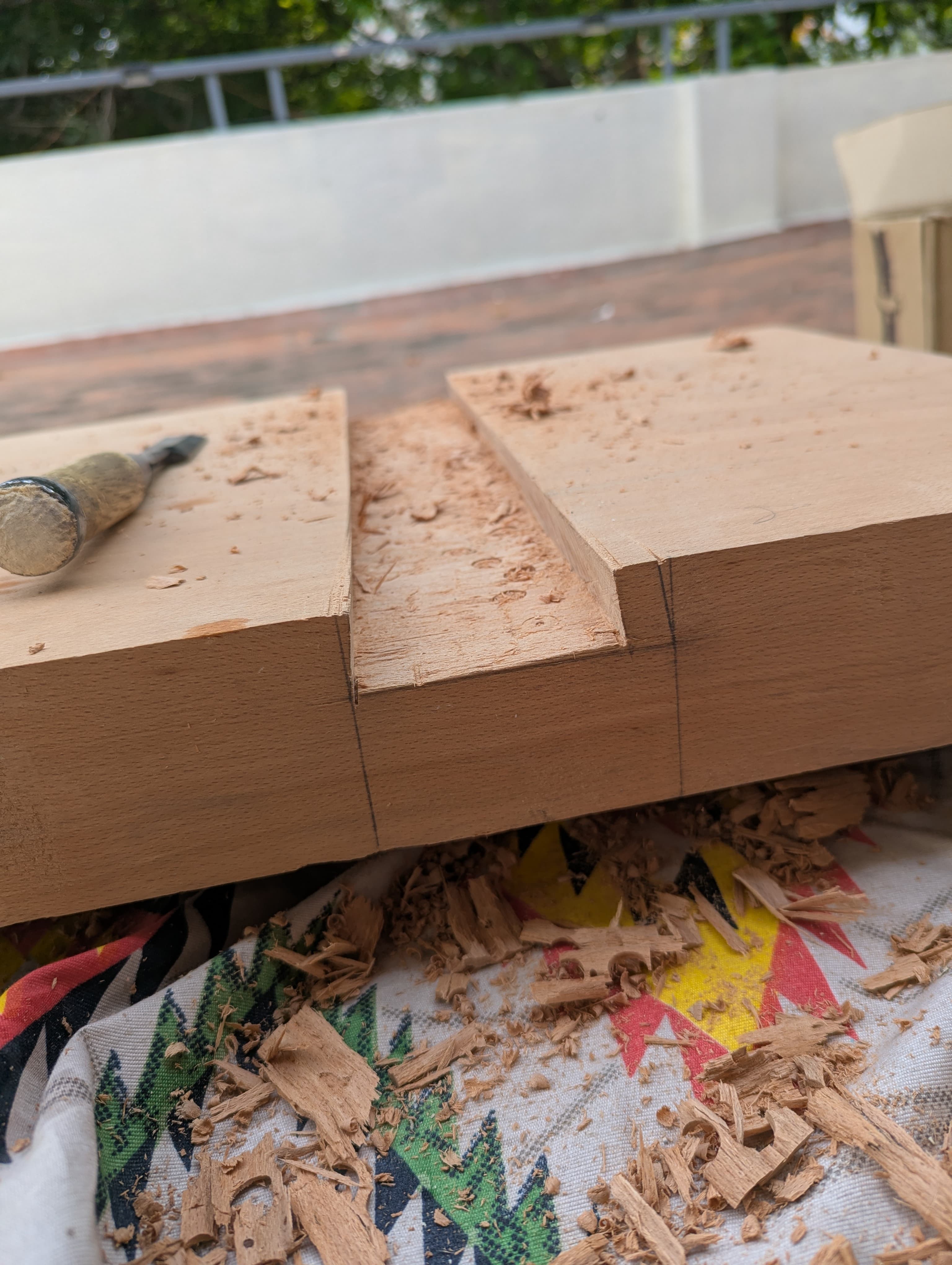
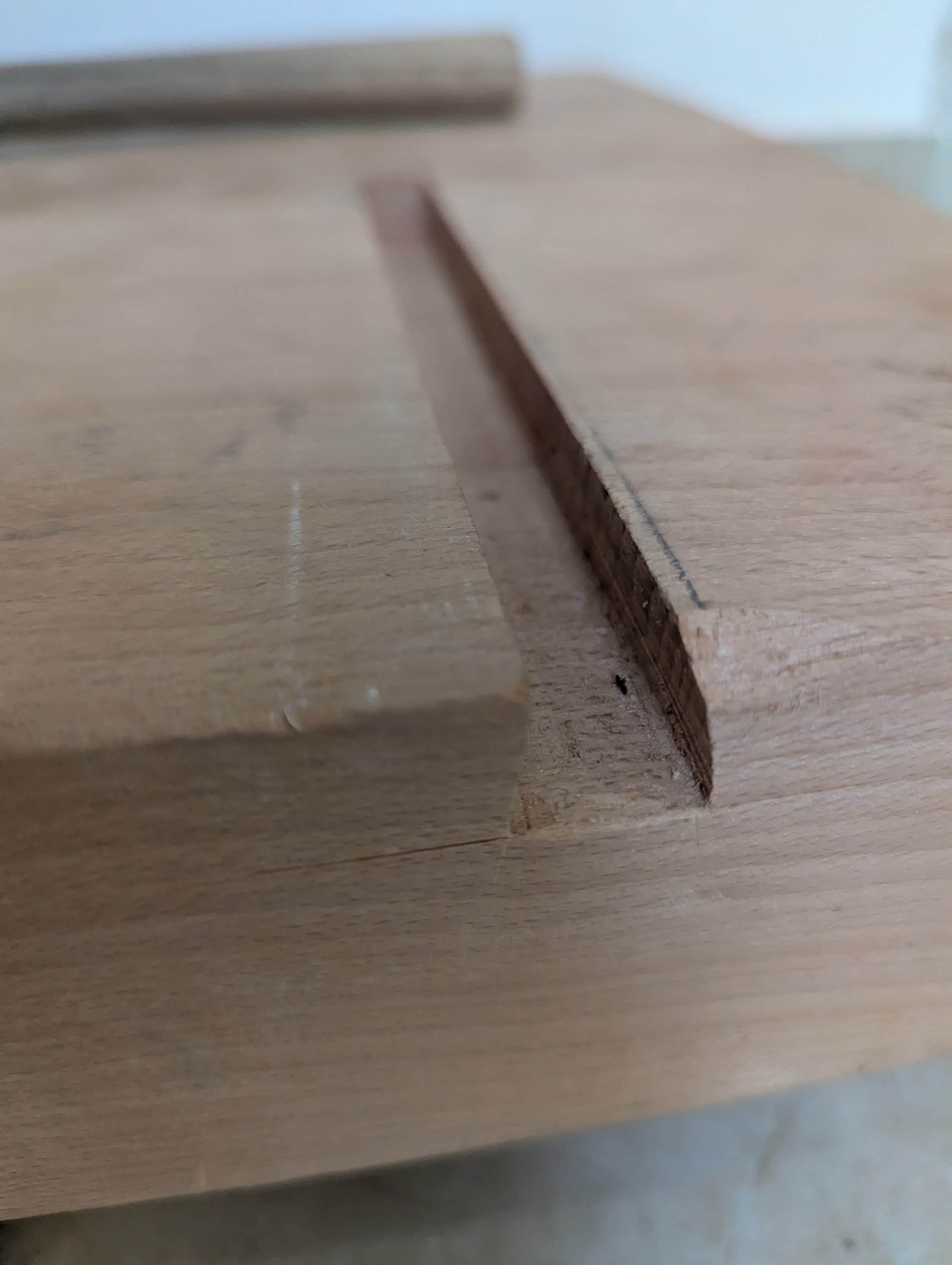
I used the dovetail guide to help cut the tail and then used a chisel to clean it up, but I made an error while taking measurements for the tail piece. Instead of taking the width from the floor of the socket, I took it from the top - so the tail ended up totally loose. I decided to use the other leg blank and went with the correct dimensions this time. After reading a lot of advice online I decided to go really slow with adjusting the sliding dovetail, but still ended up making the tail too loose in the socket. I remedied that using some glue and shavings that I added to the tail sides. The tricky thing with sliding dovetails is that every test fit shaves off a little more material and there is no putting it back, so it is very easy to go from too tight to too loose without noticing.
Since the first leg blank had ended up undersized, I cut the second socket smaller to match it.
Both legs were tight enough that they needed 5-10 hammer hits to fit into the socket. I would say not bad for my first sliding dovetail experience.
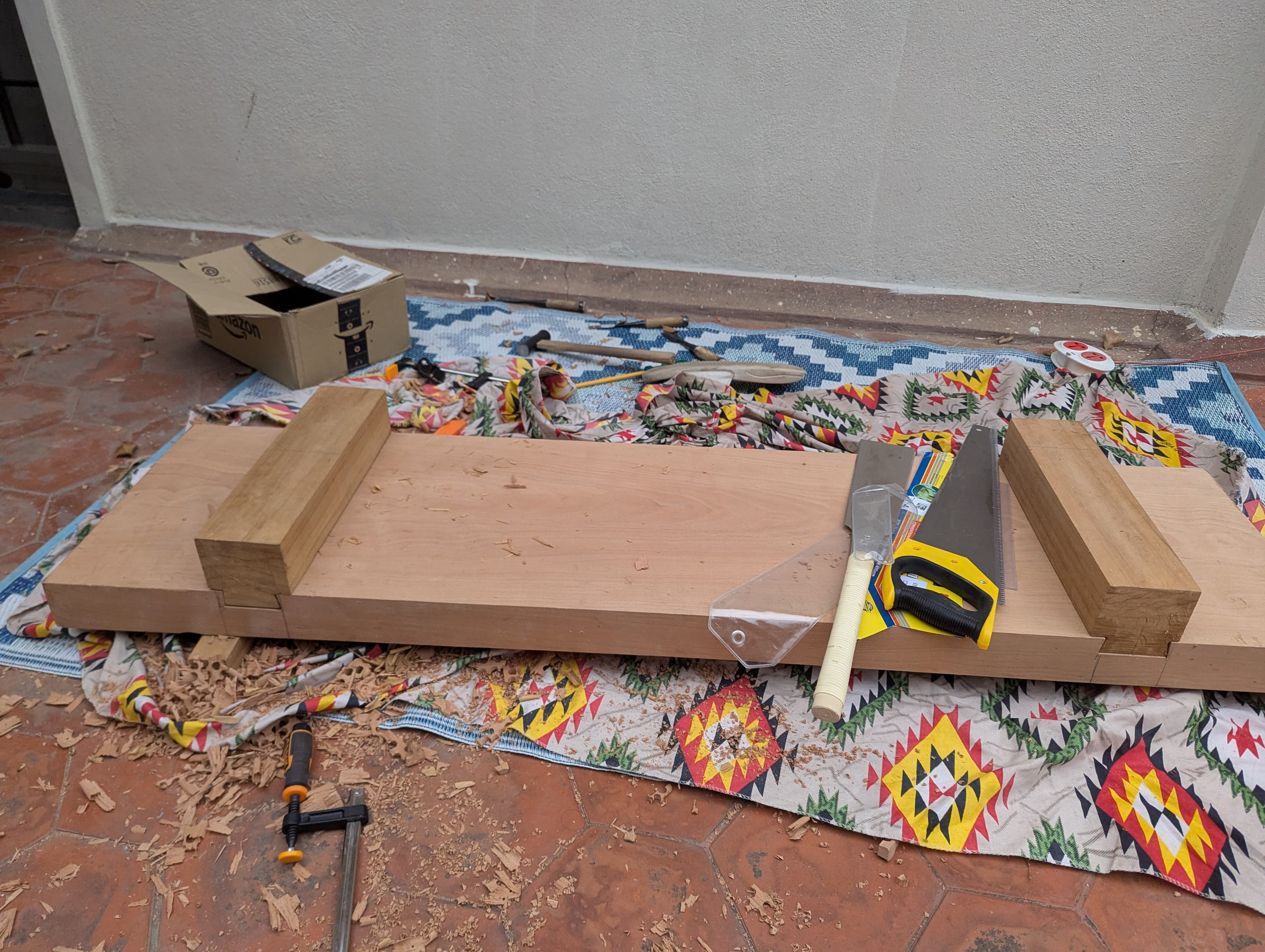
The pull stops are 2 stopped sliding dovetails, with 1 being shorter and the other longer. It was a lot of chisel work making the sockets this time and the router plane (a tool for cleaning and leveling the bottom of recesses) came in handy to make the floor of the socket clean. I ended up making the tails loose again, even after learning my lesson from the leg sockets and had to use the old glue and wood shavings trick to fix it up.
Conclusion
With the pull stops in, the atedai was done and I could finally try out the knees-and-pull-stops style of working I talked about earlier. Overall I am satisfied with the final result and excited to start working on more complex projects. A couple of things I would change if I did it again:
- Go with a shorter length — 3-4 feet instead of 5 feet. At 5 feet, the bench is pretty unwieldy to move around.
- Get something like an Azebiki saw to make cutting the dovetails easier.